

4·
5 hours agoNew York specifically has a law barring the state from prosecuting crimes that the Feds have already prosecuted. Other states don’t have that law, so other states could prosecute him at the state level.
New York specifically has a law barring the state from prosecuting crimes that the Feds have already prosecuted. Other states don’t have that law, so other states could prosecute him at the state level.
That would honestly be a better representation, but it won’t happen. Once it is in progress and things have started going up, lawmakers will quietly keep the project funded so they don’t have to deal with the construction eyesore indefinitely. Dems will just see it as “we want to get it done before his term is over, so our guy doesn’t need to deal with finishing it when they’re in office next.”

And this is actually how I’ve said it should be done from the start, though those ages are too granular for my taste. Just allow the user to verify their age once, then it shares a broad (child/teen/adult) age range with whatever asks.
We even have the technology to securely verify a person’s age without sharing any details, the same way we can share a password without actually storing it directly. It would require governments to actually pull their heads out of their asses and be technologically literate, but it could 100% be done:
Step 1, the government sets up a public database query. This simply returns a “true/false” response for if a hash matches their database of people over 18. Have people set up a password or PIN directly with the government (probably when they’re applying for an ID, which they would need to verify their age anyways), to act as a salt for their personal info hash.
Step 2, the user who wants to verify their age enters their data and password on their device. This info never leaves their device. It is hashed, and sent to whatever service their device is trying to verify. Google account, iCloud account, Microsoft account, etc… It can even be a local user account for things like Windows or Linux machines that don’t want to use cloud accounts. The important part is that the info is never directly sent, only the salted hash is. And simply using the info on a stolen ID won’t help, because you don’t have the password so the hash will be wrong.
Step 3, this hash can then be used to query that database, to see if the user is over 18. Again, the government simply returns a basic true/false on whether the info matches something in their database. It doesn’t give any specific info about the person. The service (whatever it may be) never gets your personal info, because they only saw the salted hash. And the government doesn’t need to know what specific device or person is trying to verify, because they only saw Microsoft/Google/Apple/etc asking “hey, does {hash} match your hash database?”
Step 4, once the query returns as true, the account is now flagged as age verified. This flag can be set directly on the account, so any device the user logs into can automatically be verified without needing to repeat the process.
On the user’s end, they get a much smoother experience. They never need to deal with the “are you over 18” pages on porn sites. And they don’t need to verify each individual site. The site simply asks if the user is over 18 as part of the initial https handshake before the webpage even loads. And then it boots the user (or more realistically, redirects them to a SFW “your device isn’t age verified, here is how to do that” page) if the user isn’t verified. And once a user is verified, it can be logged directly on their account so that they don’t need to verify each individual device. Your iCloud/Google/Microsoft/etc accounts could simply have the age flag added to your account, so any device you log into is automatically verified.
And importantly, parents protecting their kids is as simple as refusing to age-verify their kid’s accounts. By default, everything assumes you are a child until proven otherwise. Protect your password (which you should already be doing anyways) and your kid can’t sneak into your purse to use your ID to secretly verify themselves. Hell, you can even allow verified users to create specific child/teen accounts for their kids, which can be trusted without needing to re-verify anything. Because (again) that is simply a tool for parents to use if they feel like they should. By default, everything is assuming you’re a child anyways.
But of course, this is all a pipe dream. It will never actually be implemented in a sane way, because the tech companies are the ones pushing for age verification. They want to be the ones to handle your data, which means they’ll actively rebel against anything that takes that away from them. They’d lobby governments to prevent the hash database system from being implemented, because it would prevent them from being able to collect your data directly.

Kind of? They were indicted in Romania a while back, but those charges were quickly dropped because the investigators fumbled some key evidence. This is a new set of charges, supposedly with new evidence that isn’t mired in procedural issues. They are already trying to fight their extradition to the UK for rape charges, so this is another set of charges to add to the list.
While I agree, the way the article is worded makes me suspect that is the name of the crime they’re accused of.
Sort of like how Trump was found liable for “sexual abuse”, because the jurisdiction it occurred in strictly defines rape as penis-in-vagina sex. And since he “only” (ugh) used his fingers, it wasn’t technically rape as far as the law was concerned. But the judge who oversaw the case later had to clarify that it would colloquially be referred to as rape, even though that wasn’t the technical term that the lawsuit used. Because Trump was trying to use the “well I wasn’t found liable for rape, so she can’t say I raped her” argument in his defamation lawsuit.

The em dashes always give it away tbh. Anything “coded” by this user would 100% be slop. If they can’t even be bothered to think of a pitch for it, why would they think of the code?

Yeah, there is no such thing as an accidental discharge. Only negligence. Unless the weapon can fire without the trigger being pulled (some old guns can, but basically every modern firearm has mechanisms to prevent that) there is no such thing as an “accident”. You were negligent in handling the firearm, and your negligence caused it to fire.
And if you hit someone with that negligent discharge, your negligence caused them to be shot because you were negligently aiming it at them. It wasn’t an “accident” that they got shot, because it wasn’t fully preventable and you should have prevented it. The only reason the “accident” occurred is because your negligence directly allowed the chain of events that led to the gun being fired, and led to the person being shot.
We should treat “accidental” discharges as if the person intentionally ignored the safety guidelines that they undoubtedly knew to follow. And if you’re intentionally ignoring safety procedures, then you’re causing a dangerous situation due to willful negligence. And willful negligence can be a criminal act when it involves injuries and death.
Even in cases of a child getting a gun and playing with it, it’s not an accident when the child discharges the firearm. Maybe it was an accident on the child’s part, but it was the parents’ negligence that allowed the child to access the firearm in the first place.

I actually enjoyed the Pattinson Batman movie. It was a callback to the Detective Comics origins. Hollywood tends to focus on the action, but Batman in the comics is first and foremost a detective. So the Battinson movie was focused on that. And for most of the movie, he was basically just a dude in a hoodie with a bike, riding around town looking for clues. The Riddler was a great villain for that kind of movie, and doing it any other way would have reduced Riddler’s entire character to just another punching bag.
It’s an old meme, based on a series of Facebook screenshots:
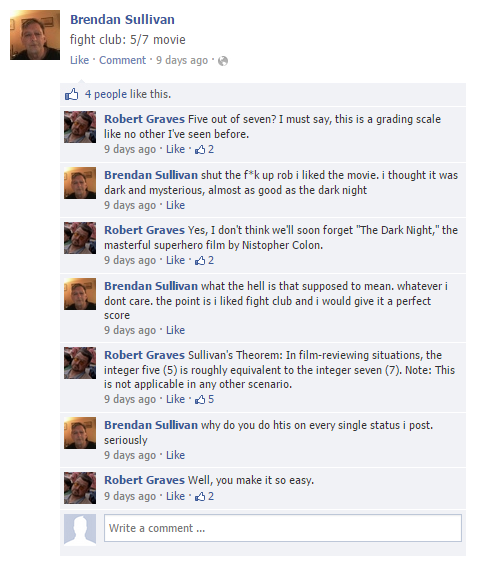
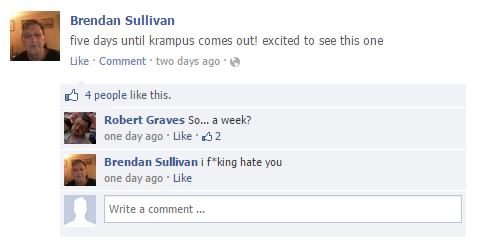
Once the screenshots went viral, people started memeing about it, like so:
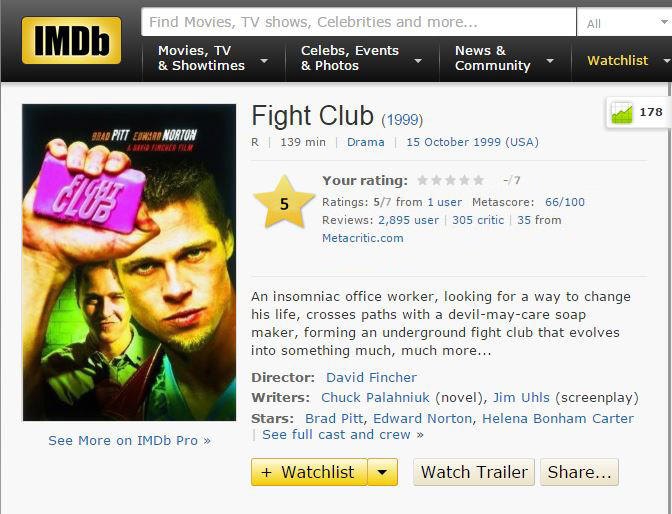
As for why the 5/7 was posted here? Probably because OP was asking about the Nolan trilogy, which is mentioned in the original 5/7 meme.
I guess we doin lean now


Oh, I agree. My point was simply that if a restaurant is trying to ditch the “mom and pop” vibes and get professional photos for their menus, it’s not something that is done on a whim. It’s not just a “snap a pic with your phone and post it on your menu” type of thing if a restaurant is trying to look like more than a family owned joint.
And that’s before we even get into the actual menu design, because a well-formatted menu is designed to draw customers towards the most profitable items. All of those highlighted and “chefs special” menu choices that are in big bold bright letters in the center of the menu, with accompanying pictures? Yeah, the restaurant has done the math on the raw ingredients and prep time for each menu item, and those featured choices are the items that are most profitable for the restaurant to make. The goal is to encourage people to buy the things that make the most money. Those small menu options that are tucked away in the bottom of the menu like a footnote? Those are the least profitable. A good menu layout can increase dine-in profits by upwards of 10-20%, simply by encouraging people to order the most profitable items.
And while I don’t agree with using AI for the food images, I can see how a restaurant manager would balk at a $10k professional food photographer bill. Especially when that also requires closing the restaurant for a day, (meaning a day of lost profits) so the photographer can work with the cook staff for the photos during a dedicated photography session. Why would they eat that massive cost, when they could generate a “good enough” (meaning the majority of people won’t notice or care that it is AI) image for free in a few minutes? Again, I don’t agree with it, but I can see why a restaurant manager would see it as an attractive alternative.
I used Google Timeline to prove I was at work one time. This was back when I was freelancing. My client tried to say I was stealing time, because I had an off-site meeting that ran long. They were threatening to withhold a few hours of pay, even though I was at the worksite the entire time. I pulled up my timeline and used it to prove that I was, in fact, at the meeting site for an extra few hours. Being able to de-Google that functionality has a lot of value to certain people.

Yeah, the 5v charging (especially if it says 5v on the label) is an immediate giveaway. Authentic controllers don’t use proper USB 5v. But USB circuitry is cheap and extremely easy to implement, and it uses 5v as the standard… So lots of Chinese fakes default to using that.
And this is true for a lot of things, not just PS3 controllers. If something doesn’t normally use 5v USB, the cheap Chinese one almost always will. Because (again) 5v USB is dead simple to implement. Those circuits are already figured out. No reverse engineering or custom chips required. They’re basically just drag and drop. So that’s what a lot of cheap Chinese knockoffs default to using.
Food photography is actually an entire branch of photography, and a lot of the photos you have historically seen haven’t been real edible food. For example, the milk in the bowl of cereal on your cereal box? That’s usually white Elmers Glue. Because real milk won’t sit below the cereal, and will be too watery. It also allows them to precisely set the individual cereal pieces (rings, flakes, etc) in place and the glue will help prevent it from floating around.
The ketchup on a burger is usually thick red paint, applied around the edges of the rubber pickle with a syringe. Because they want to make sure the ketchup looks like it’s squeezed around the pickle (rather than being squished into the burger bun), and they want to make sure the ketchup is showing around the pickle juuuust enough to be obvious, without obscuring the pickle.
The funny part about food photography is that the methodology is largely regional. For example, Japanese audiences largely expect a burger photo to have the bun sliding off of the burger, like so:
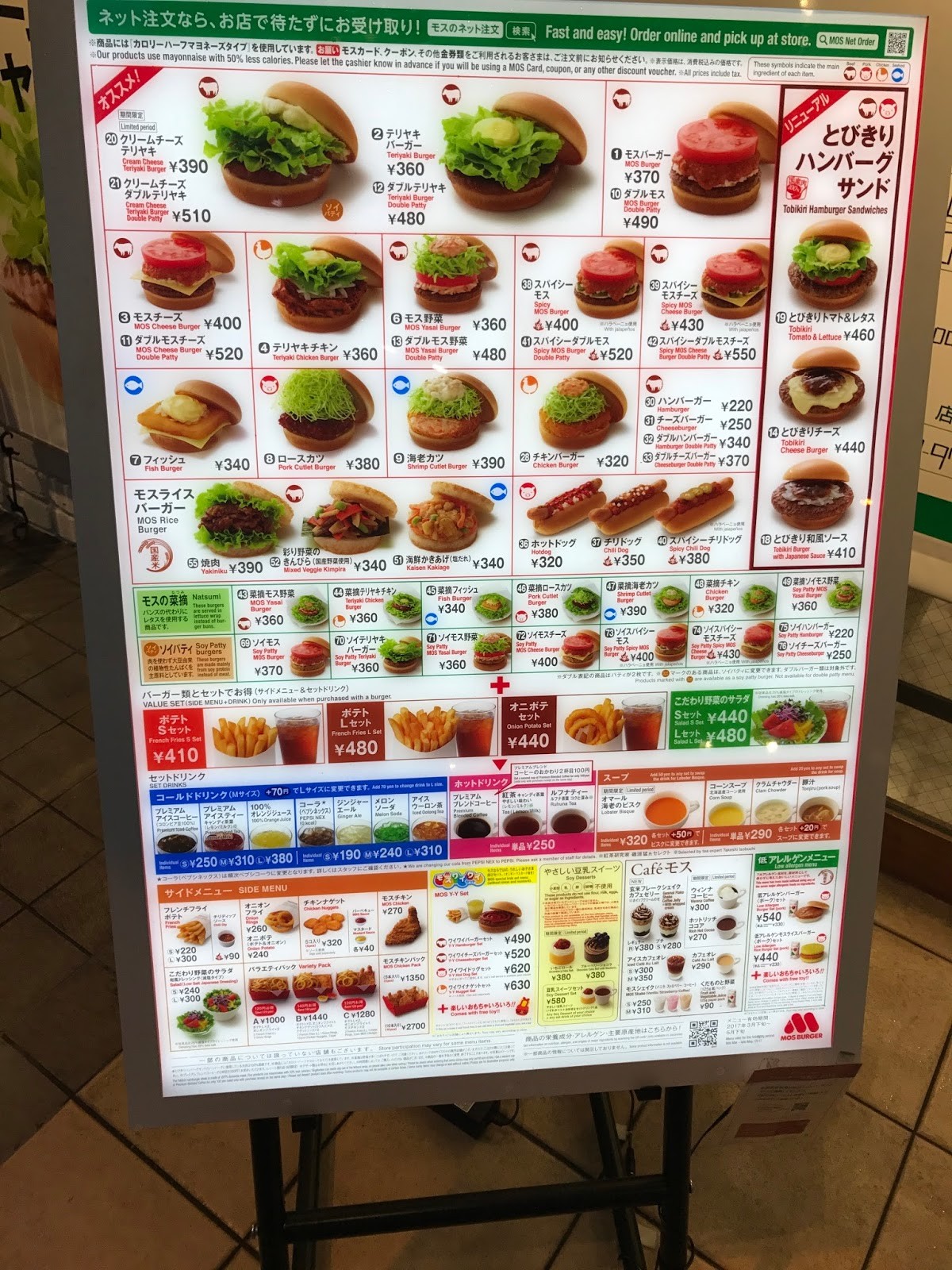

Originally it was done to prevent the bun from obscuring any of the ingredients. But now it is a sort of cultural thing, where lots of menus do it simply because that’s what the other menus do. But it also means that Japanese burger photography is done using different materials and methods than western burger photography. But to use the second image as an example, that runny egg yolk on the right burger is probably some sort of inedible yellow paint. Because the photographer wants controllable color and consistency, and cooking is rarely consistent enough for that. The glaze on the meat is probably some kind of clear-coat rosin or spray. The egg was probably cooked hard and then sliced with a scalpel to create that perfect wedge slice for the yellow paint to be added. Etc…

My partner is a clutz, and I always joke that her Coffee Table Detector (little toe) is working great. It always earns me a death stare while she’s reeling, but being momentarily pissed at me is usually pretty effective at distracting her from the fact that her toe hurts.
A few reasons.
First is testing the response times, locations, scale, etc… If you intentionally violate air space, you can measure how long it takes for your future opponent to scramble their own response. You can see what kind of equipment they send to respond. You can see where the response comes from. You can see how many combatants they send to respond. That is all valuable info if you’re planning potential attacks in the future.
Second is creating a “boy who cried wolf” situation. Repeatedly violate their airspace, and they’ll begin to see the violations as routine. They’ll stop treating them as genuine threats, and will simply start treating them as just another annoyance. None of the violations ever result in an attack, so why would this one be any different? Then when the actual attack comes, your opponent is caught with their pants down because they weren’t fully responsive.
Third is money. In the grand scheme of things, flying a single drone around is a drop in the bucket. In contrast, a sudden scrambled response costs a lot. It’s a lot of sudden manpower and logistics to coordinate. Especially when the violation turns out to be a nothing-burger. If you want to begin straining your opponent before a war even begins, make them start counting pennies before you attack.
Fourth, it could be posturing. Look at how weak our enemy is! They can’t even patrol their own border. They’re afraid of us and let us into their airspace. Etc…
Fifth could be intimidation. Remind them that they’re within poking distance. Especially since they’de supporting Ukraine. Want to discourage that support? Encourage them to circle the wagons and bring their support home instead.

The TL;DR is that gold prices spiking is a major sign that people are completely losing faith in the dollar, and are attempting to buy assets that will hold value better. People expect major inflation, and are attempting to buy gold (which will hopefully hold its value) instead of keeping all of their funds as dollars (which will lose value when inflation happens). But this sudden surge in gold demand has caused the recent price of gold to drastically spike.
Yeah, pretty much this. In regards to tech, the fediverse often suffers from the average familiarity problem:

The average user barely even knows how to check their email.
Yeah, the old Napster/Limewire days were rife with people labeling any kind of parody or meme song as being written by Weird Al or SoaD. Probably because they had the name recognition and would actually show up in search results. And it was just plausible enough that they might make a song like this.
Weird Al even went on the record to say that he absolutely hated the trend. Because a lot of the parody songs that were misattributed to him were very vulgar, and he historically avoided things like excess profanity so his music would be safe for kids.
Also, I’m amazed OCRemix is still around. Pretty sure half of the music on my original iPod Shuffle came from that site.