

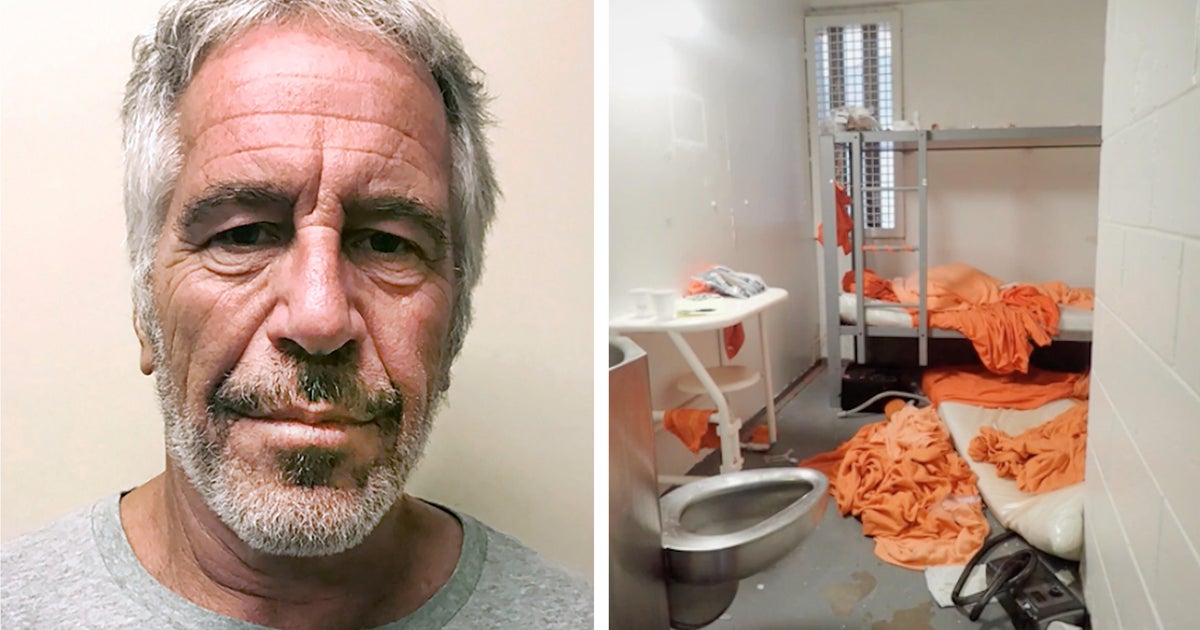
Across the political spectrum, a large chunk of Americans believe, despite a lack of evidence, that Jeffrey Epstein did not die by suicide.
Now one forensics expert, working with photos and files provided by Epstein’s brother, is weighing in to contend that this suspicion might be right.
Dr. Michael Freeman, who is editor-in-chief of the Journal of Forensic and Legal Medicine, spent months reviewing never-before-published autopsy records provided to him and CBS News by Epstein’s brother. The 2019 ruling by the the New York City Office of Chief Medical Examiner was that Epstein died by suicide. But Freeman has concluded that Epstein’s death was more likely a homicide.
Freeman — who worked with Anders Eriksson, a professor of forensic medicine at Umea University in Sweden, and Itiel Dror, a researcher specializing in identifying bias in forensic decision making — presented their findings Monday in London. Freeman said he believes that in August 2019 the world’s most notorious sex abuser was likely attacked and killed by another person.
Relevant point from the article:
eww you could have flagged this as nsfw, I don’t want pictures of pedophiles on my feed
I personally make an exception for dead ones
{inserts pic of PresiDunce Orange Shitnugget}
I see they finally got this case reassigned to Captain Obvious.
Next they’ll be saying one can’t shoot themselves in the back of the head twice.
while falling out a 10th floor window
All this talk about marks and bruises and not a single comment about that earlobe, wtf is up with it
That’s called a keloid. It’s an abnormal type of scar.
Those who have ancestry from Sub-Saharan Africa, Asia, or Latin America or if you have family who have them are more likely to develop them, as susceptibility is somewhat genetic.
Never heard of the very real condition of “pedophile earlobe”? Wikipedia is your friend.