We are pretty much still on track for a StarTrek like timeline. The 3. world war should have started by now and everything should be going to shit even harder than it actually is but the general direction fits.
Ima say complete societal collapse by 2030. I know, im so optimistic.
What we actually had in 2003: Gary Brolsma
That’s the same. Somebody who is free to express who he is. Why explore space if not to overcome the boundaries that hold us back on earth? To live in a floating tin box in a space where one can’t breath, no rocket is needed. Submarines are readily available.
Utopian SF was quite the thing. A shame that dystopian SF became the objective and blueprint.
we wanted star trek and got 1984 instead
We are still on trek:
World War III was the last of Earth’s three world wars, lasting from approximately 2026 to 2053. The conflict involved nuclear cataclysm as well as genocide and eco-terrorism. The post-atomic horror in the aftermath persisted as late as 2079.
When you rode to school on a horse and then watched a man walk on the moon before you were 40 it probably didn’t seem unreasonable that the future would look like that.
The same goes for the digital era progress. We saw computers go from being the size of a whole room to fit into our pockets with multiple times the computing power in a few years. Now we have hit the pysical limits of that technology. Everyone is still used to computers changing and being exciting and we still chase that with billion dollar investments.
But the truth is semiconductor production technology is pretty close to maxed out and new advancements in the digital age are 95% dependent on that. Digital technology will soon become boring and default.
That’s the biggest part for me. People saw the end of the horse as transport, and commercial air flight be a thing.
That’s a wild amount of progress.
And then there’s Star Trek, which has World War III dated from 2026 - 2053
nuclear/MAD costed 600mil lives(and then a future borg attack right after)
World Wars don’t start as World Wars. They start as regional conflicts that spiral. Right now we have at least two really good candidates for a conflict that could spiral.
4 at least, 2 hot ones. Iran and Ukraine of course. Kashmir (India/Pakistan) Taiwan.
And thinking off the cusp: North Korea - South Korea (less likely at this current moment), and Greenland.
Theres still time.
we havent even had the bell riots yet.
Much less sanctuary districts. which is exactly what Kennedy wants to create for the home less, criminals, and mentally ill to be exploited in.
History is told by the victors. San Francisco camp sites can be seen as sanctury districts. The riots can still have happened:
Sisko checked the victim’s ration card and thereby discovered that the man who had died helping them was Gabriel Bell. Realizing they had changed the past, Sisko (assuming Bell’s identity) and Bashir joined gimmie Michael Webb – whom they had met earlier – in gathering support for a rally outside the District Processing Center
Is this New Trek?
no, First Contact.
No, it’s always been roughly that time period. Though I think in TOS it started in 1996.
Which, in fairness, could still be correct. From The Federation’s perspective, looking back centuries, some event in 1996 may be seen as the catalyst that started the chain of unresolved events we are currently in and cannot fully appreciate or understand. Just spitballing some candidates from the mid 90s:
Genome sequencing. There could very well be a lot of genetic work being done in secret right now that traces back to 1996.
Third Way Politics. Historians could say the re-election of The Clint’on cemented this failed ideology which led to the downfall of the USA and WW3.
Boskin Commission. By breaking CPI, congress introduced a tiny but exponentially growing rift in the global economy that led to WW3.
That timeline is from TNG. As the sibling said, they pushed it further away because the TOS timeline became too soon.
Probably more in line with our future. Capitalism isn’t going to die on its own and people love their power.
So 10 years late?
90% of old science fiction in “mankind explores the galaxy, because the old planet of earth has failed / exploded / been lost to time. Now we are being hunted by bug monsters, evil robots, and space wizards, some number of which we’ll be having sex with. Also, all of our problems are metaphors for problems people reading this book are having.”
Any suggestions for books with the bug monster on human sex?
I watched the movies recently and have been thinking about reading these books.
But also, the face on that work is killing me. It looks so silly.
The curse of science fiction. Once you go too far down the rabbit hole of the original premise, it can quickly become absurdist fantasy.
I read the first one this year and it’s one of the smoothest reads I’ve had. Great book
The first 2, 3 books are relatively grounded and really good, book 4 the Worm guy shows up and the books get a little whackier going forward till book 6 and then the series ends
Read the first one and pretend the rest of the series doesn’t exist, Matrix style
I think Messiah Is an important part of the story because it really drives in the themes. But I enjoyed all the books so I guess I don’t have an argument here.
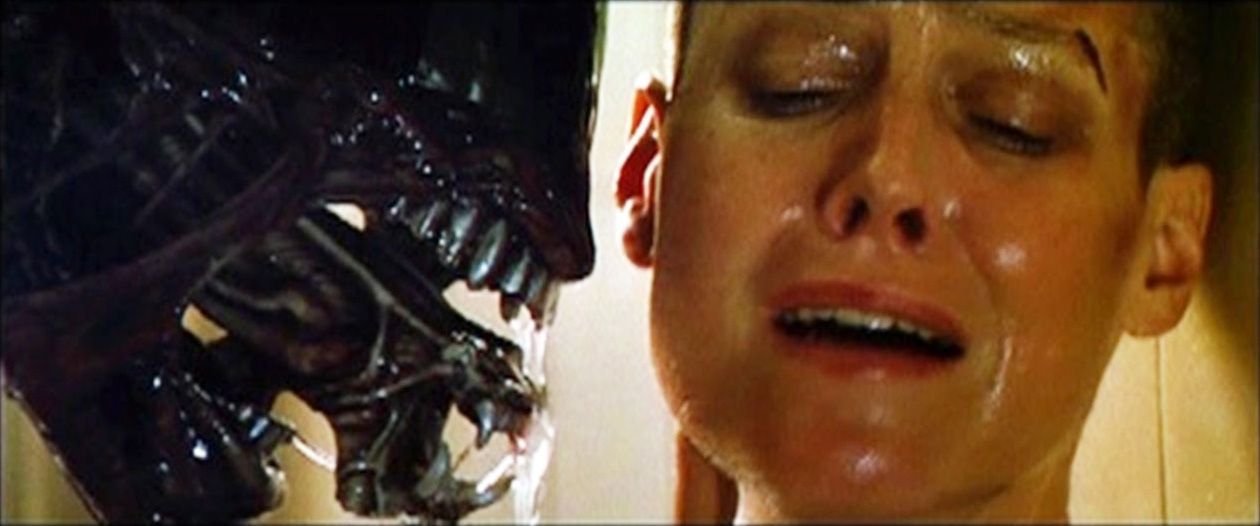
I’m not sure about books, but the movie alien is like that.
XOXO 💋
In some cases it was a way to discuss racism and the evils of society without getting censored or shunned.
Is that really a robot/reptile/alien or a metaphor for a minority in a white man’s world?
Most of them were horribly sexist and racist. So there was a lot of rapey things going on and “dark skinned” savages.
IMO most of the good scifi is deep in the metaphor realm. Showing social problems at the time in a future society like a magnifying glass. Or extrapolating what technical developments would do to the human existence. The “other” sci fi is escapist fantasy.
And thinly veiled metaphors at that!
A golden age of literature.
Considering how close the first flight and the moon landing were in time. they had every reason to believe that.
What happened?
A lower bound cost to get a kilogram of stuff up to LEO is probably something like a few dollars based on current energy prices and the delta v required. SpaceX’s Starship has a price tag of $140 per kilogram. If you want O’Neill cylinders and interstellar ships and stuff like that in space, it would be preferable to build them in situ from the material already up there naturally. You can build more, faster, and bigger that way. The problem then is you need to launch from Earth a bunch of factories, i.e. refineries and so forth that can transform raw material from asteroids into your spaceships, or at the very least factories that can build more and bigger factories (but in any case we’re still talking about bootstrapping factories). It’s anybody’s guess how much stuff you need to get up there to start the whole thing. How small can you make a steel plant? I think it’s quite big. The solution to the Fermi paradox may well be that it is just too burdensome to any civilization and their planet to carry out such a megaproject and hence why we see no von Neumann probes turning the universe into paperclips. A von Neumann probe is more than a probe. It’s a probe factory and you need an initial factory in space to get the self-replicating process started, or rather factories. If the probe contains a computer, the probe needs to contain a chip fab too and a silicon ingot plant and a plant to make all the chemicals for the chip fab process and all the other stuff involved in making a chip and all the stuff involved in making the chip fab itself, and so on. This is like Factorio but indescribably complicated.
It suffices to say we’re still doing space exploration like we were in 1969: tiny humans packed in like sardines in a tiny capsule launched infrequently on a tiny rocket for short duration missions to places which are never revisited. Maybe it will always be that way. We’re stuck here and the only things we will ever glean from other worlds far from our own is whatever we can barely see through telescopes. It will take a lot of outside of the box thinking to change this.
What happened?
corporate greed and the epstein class
but I repeat myself
The USSR went away and thus the US gov no longer had any need for a patriotic dick measuring contest. (Joking, but only kinda.)
Not even half a joke. The USSR won the space race by every metric except for about two, one of which was the famous one.
Why do space pioneering? For science? For humanity?
These are not the motives of capital. Of course the US lost interest. Oh except that they were horny to make space a new theater of war, which thankfully wasn’t particularly feasible.No oil in space of course.
Doesn’t Titan have some sort of hydrocarbon?
Oh except that they were horny to make space a new theater of war, which thankfully wasn’t particularly feasible.
Well I meant to the extent or scale they imagined at the time. Still depressing.
Fair enough, we don’t have laser rifle battalion battles. Yet.
I hope social progress strongly outpaces military one in interplanetary context… Red Faction wasn’t a manual.
Turns out getting to the moon is a lot easier than getting to anywhere else when you need to keep astronauts alive. And anywhere you go, you need to bring your way home with you, which is also easiest on the moon (both for the landing safely and taking off safely).
It takes 3 days to get to the moon, so they need about a minimum of week’s worth of supplies and life support to get there and back. The closest planets are about a month away when the orbits are ideal and can take months before the next ideal orbital positions (or over 2 years for Mars), so either returning or supplying a long term mission is a much bigger problem than the moon (and we haven’t even done a long term manned mission to the moon, the longest was Apollo 17, total trip time was about 12.5 days with just under 75 hours spent on the moon).
The asteroid belt is always at its “closest” to us (other than the variation in Earth’s orbit, which isn’t perfectly circular), but any specific destination there does change and is farther than Mars (effectively, at least… Ceres is sometimes closer than Mars, but a journey to Ceres would be more complex than a journey to Mars because it’s orbit is farther out).
And the outer planets are even more complicated to get to, even if some of their moons are the most interesting looking places in the solar system.
But even those ones are trivial to get to compared to exploring destinations outside of our solar system. Voyager I just made news by passing the one light day from us. Alpha centurai is about 4.24 ly away. Voyager I was launched in 1977, so it took almost 50 years to reach one light day, so at that rate, it’ll take about 77 thousand years to get there, though that assumes our system and theirs are the same mass, but AC is a binary system about 2x as massive as our system, so that extra mass pulling would speed that up a bit, though if we wanted to do a round trip that saved time would be added on the other side (though we could possibly get a bigger gravity boost to leave the system at a higher speed).
And that’s assuming there’s something interesting to make AC worth visiting. Scientifically, it could be interesting to study a binary system, though one is the stars is pretty active so the system might not be very life-friendly.
Pulling back to our system, there’s a lot of resources in the asteroid belt that might be relatively easy to access for mining. That said, it’s still orders of magnitude more expensive than mining on earth.
Space is hard and might not even give much value other than satisfying curiosities (which IMO is still worth pursuing, just not as a high priority), that’s what happened.
If we had kept up with space investment as a priority, my guess is that we might have a manned base on the moon (assuming it was sustainable, same assumption goes for the rest), maybe manned missions going as far as Mars, though I still don’t see a colony on there. Perhaps some limited manned missions to the asteroid belt, which would be more feasible with an orbital Mars base.
Though keep in mind that even the original space race in the 60s was more about flexing nuclear delivery capabilities to the USSR and science and imaginations got to tag along for the ride rather than it being a pursuit of knowledge or even strategic space resources (beyond earth’s orbit).
What happened?
The conflicting needs of those alive today vs the needs of potential people who will live centuries in the future.
The reality of physics.
We brute forced our way to the moon. Doing it efficiently needed a lot more technology than we had at the time, we could have just kept spending billions of dollars a launch and throwing away skyscraper sized rockets to send a few people at a time, but until we had better material science and faster computers, there’s was no way to re-use rockets. Heck, we’re still trying and don’t know if we’re going in the right direction.
Going to another star in a human life may not even be possible. We can think of potential ways to do it, but it might be that we have no way of going fast enough.
The moon is in spitting distance relative to anything else. Which means anything further (even Mars) increases the complexity and logistics significantly.
Not to mention that the Space race effectively ran right into the Silicon age. But that’s how progress works, always forward, but usually taking different forms.
“it’s 2026 and humans are exploring Uranus”
that explains all the std diarrhea
Looking for Klingons.
🎵Klingons in Uranus🎶🎶 Klingons in Uranus🎶🎵
Boldly thrusting forward cos we can’t go reverse
Speak for yourself, honey.
there’s a tepee in mianus!
I was laughing my ass of while high as a kite watching this back then.
i am still cracking up over it, just don’t tell anyone
They were close… just misspelled the sentence.
Who told you about my personal journey
Brave New World and 1984 have… aged rather well
Even some Snow Crash, too.
1984 was a fucking blueprint, unfortunately.
I wouldn’t consider either of them to be scifi.
This is why I like Glory Hammer. A few years ago they released an album that was essentially a ballad and the story they told was set in “the distant furure of 1992”
There isn’t a single track on that disk that doesn’t absolutely fuck.
(yes, I emphasize my profanities instead of censoring them because I’m not a coward)
What’s the album called, I’d love to give it a listen!
It’s from the opening if their second album, Space 1992: Rise Of The Chaos Wizards. They’ve got five albums and there is some sort of continuity, so like OP said, you can just play then in release order
Thank you! Sick name for an album, excited to listen!
Honesty, I don’t remember which album specifically that was, but they’re all good so if you want my recommendation I’d say listen in release order. you’ll be in for a good time.
Hell yeah, thanks for the suggestion!
I remember when I was a kid my Grandad told me with absolute certainty that by the year 2000 we’d all have personal hovercrafts and we’d take holidays on the moon. This was in, like, 1996.
I think he might have been a Conan O’Brien fan.
They kept doing the bit after Y2k as well.
Writing fiction set in the future is a balancing act between making it relatable and believable. The marketing teams tend to over-favor relatable to a fault, so those are mostly the stories that get published. Herbert was smart with Dune, but that’s somewhat of an exception. Even now we see movie after movie set in the next few decades where humanity builds a science fiction world and it falls into ruin. Meanwhile, Texas and California have been working for 20+ years on building one damn train line.
‘Old Science Fiction’ covers such a long duration. Sure the Golden Age stuff was best served by being fairly ‘hard’ about the science and undeniably optimistic regarding humanistic progress if that was your thing.
But there was also stuff like John Christopher’s “The Death of Grass” from 1956. A dystopian proto ‘The Road’ novel that was anything but positive about the future shocks in store for us.
John Wyndam’s 1960’s novels were all Chrysalids a- gleaming on the bones of a holocaust of some description; Struck blind by asteroids, starfish monsters crawling from the sea, evil alien children surrogacy etc.
JG Ballard didn’t get going until the early 60’s but every book was a dystopic psychogeographic crawl through the lizard brain of humanity at the end of its tether.
Harry Harrison’s ‘Make Room, Make Room!’ came out in '66. Easily his best book by a megalithic mile, he turned to the sort of heroic Flashman-esque trash later in his career but Make Room was later filmed as “Soylent Green” in 1973. In my opinion still the most accurate take on where the world is going to end up. SPOILER ALERT! WE’RE ALREADY THERE!
Wait where are we eating people?!
You mean to tell me that you aren’t eating people yet!!??